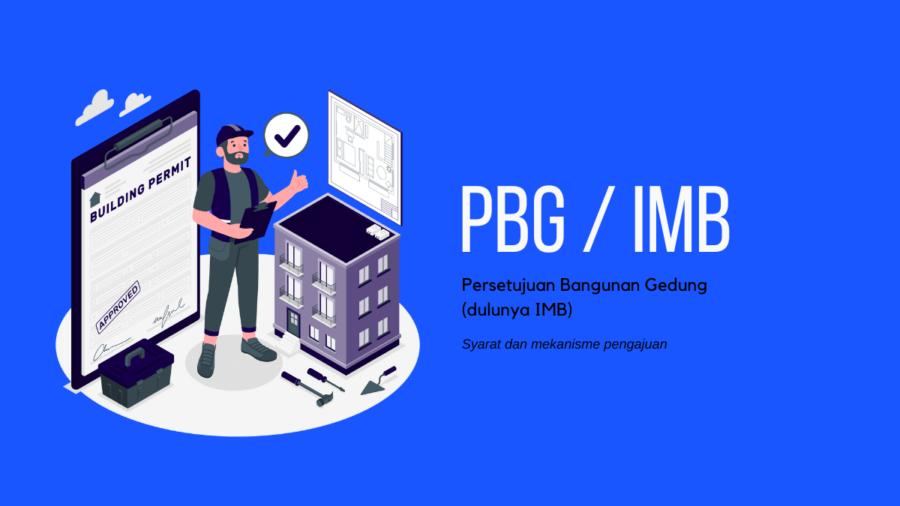
房屋的PBG证:买家常常忽略、却十分重要的文件
2026年9月18日
If you're not someone who works in the property world, that question might sound like it's a developer's or homeowner's business.
But if you're buying a house, PBG is one of the documents worth understanding.
Not because you need to memorize building regulations.
But because buying a house isn't just about owning land and a building.
You also need to know whether the building was constructed and administered in accordance with applicable regulations.
So what exactly is PBG?
And why should home buyers care?
What is PBG?
PBG stands for Persetujuan Bangunan Gedung (Building Approval).
Simply put, PBG is an approval granted by the government to a building owner to construct a new building, modify, expand, reduce, or make certain changes to a building in accordance with applicable technical standards.
PBG came into effect after IMB (Izin Mendirikan Bangunan / Building Construction Permit) was replaced within the building permit system under Government Regulation (PP) No. 16 of 2021.
So if you still often hear people saying:
"Does the house have an IMB?"
For buildings following the new regulations, the term now used is:
PBG.
However, old IMBs issued before PP 16/2021 can still remain valid under certain conditions, for example if the building has already been constructed and has not undergone any changes.
So what's the difference between PBG and just a "building permit"?
PBG isn't just about obtaining a piece of paper.
The concept relates to a building's compliance with technical standards for buildings.
That means when a building is constructed or undergoes certain changes, there are technical aspects that need to be considered.
From building planning to how the building meets standards related to safety, health, comfort, and convenience for its users.
Because of this, PBG shouldn't be seen as:
"An extra, troublesome document."
But rather as part of the process of ensuring a building is constructed on a clear foundation.
Why should home buyers care?
Because you're not just buying a land certificate.
You're also buying the building that stands on that land.
And both need to be viewed as a single unit.
Imagine you find a house that's very appealing.
The price fits.
The location is strategic.
The building also looks good.
But you never ask about the building documents.
A few years later, you want to do a major renovation, change the function of a room, or carry out a subsequent transaction.
Only then do you realize there are administrative and technical matters regarding the building that need to be sorted out.
This is where the importance of checking early on comes in.
It's better to ask before buying than to find out after the transaction is complete.
Having a PBG doesn't automatically mean a house is "perfect"
This is also important to understand.
Having a PBG doesn't mean the house is free from all possible issues.
PBG relates to building approval in accordance with technical standards and the building administration process.
You still need to check other things.
For example:
- land status and legality
- certificates
- land boundaries
- the physical condition of the building
- road access
- drainage
- renovation history
- the surrounding environment
- and other relevant documents.
So don't think:
"There's already a PBG, so everything's settled."
No.
PBG is one part of the due diligence process, not the only check you need to do.
So, what does this have to do with renovation?
This is a part that people often only think about after buying a house.
Say you buy a two-story house.
A few years later, you want to:
add a floor, expand the building, change the function of a room, or make other major changes.
Certain building changes may require a PBG process because PBG indeed covers new construction as well as modifications, expansions, reductions, and other changes that require technical planning.
So don't assume:
"The house already has a PBG, so I'm free to renovate however I want."
That's not necessarily true.
If you're planning a major renovation, it's best to first check whether the change requires adjustment or processing related to PBG.
What about older houses?
Well, this is interesting too.
Not every old house will have a document named PBG.
Some houses were built when the term still used was IMB.
And an IMB issued before PP 16 of 2021 took effect can still be declared valid as long as the building has already been constructed and has not undergone certain changes.
So if you buy an older house and the owner shows you an IMB, don't immediately think:
"This is wrong because it's not a PBG."
Check the year it was issued and the condition of the building.
Context matters.
What about new houses from a developer?
For new houses, buyers can ask the developer about the relevant building documents and permit status.
No need to be shy about asking.
You can start with a simple question:
"Sir/Ma'am, what's the PBG status for this unit?"
Then you can follow up with:
"Has the document already been issued, or is it still in process?"
"Is the PBG for the unit or for the whole area?"
"What documents will I receive at handover?"
With these questions, you'll get a clearer picture before making a decision.
Are PBG and SLF the same thing?
Well, here's another term that often confuses prospective buyers.
PBG and SLF are not the same thing.
PBG relates to the approval for constructing or modifying a building in accordance with technical standards.
Meanwhile, SLF (Sertifikat Laik Fungsi / Certificate of Function Worthiness) is a certificate stating that a building is fit for use according to its function.
Simply put:
PBG → relates to approval for constructing/modifying a building.
SLF → relates to a building's fitness for use before it's utilized.
Both are part of building administration.
So if you come across the terms PBG and SLF in property documents, don't assume they're the same document.
Do buyers have to process the PBG themselves?
Not necessarily.
It depends on the condition of the property and the status of the building.
For houses already built by a developer, the building-related process is usually already handled as part of the project's administration in accordance with applicable regulations.
However, as a prospective buyer, you still have the right to know the status of the building documents related to the unit you're going to buy.
For a second-hand house, the situation can be different again.
Because of this, don't use a single assumption for every transaction.
New houses, second-hand houses, renovated houses, and old buildings can all have different administrative conditions.
How do you check it?
The government provides SIMBG (Sistem Informasi Manajemen Bangunan Gedung / Building Management Information System) as an electronic system for the administration of PBG, SLF, and other building-related services.
For the home-buying process, you can also request the relevant documents from the seller or developer and match them against the physical condition of the building.
If there's a mismatch or you come across a situation you don't understand, don't jump to conclusions.
Ask for an explanation and, if needed, consult with a competent party.
Especially if the property you're going to buy has a history of major renovations or building changes.
Don't just ask "Is there a PBG or not?"
A better question is:
"What kind of building does this PBG cover?"
Why?
Because the physical condition of the building you see now should also be taken into account.
For example, the building documents may show a certain configuration, but the building has already undergone major changes.
A situation like this needs to be asked about further.
The goal isn't to find fault.
But to make sure that what you're buying matches the documents and the actual condition.
A simple checklist before buying a house
Before making your final decision, you can add PBG to your inspection checklist:
1. Ask about the PBG status
Does it already exist, is it still in process, or is an old document being used?
2. Check whether the building matches
Does the condition of the building match the information and documents provided?
3. Ask about the renovation history
Has there ever been an added floor or a major change?
4. Ask about other supporting documents
Don't stop at just the PBG.
5. Check the condition of the land and building
Legal documents and physical condition are equally important.
6. If in doubt, seek professional help
Especially for high-value transactions or complex property conditions.
Don't wait until you're about to sell to think about documents
Many people only start seriously thinking about complete documentation when they want to:
sell the house, apply for a mortgage (KPR), do a major renovation, or handle certain administrative matters.
Yet it's better to understand all of this from the moment you first buy.
Because a house isn't a small purchase.
You might live there for 5, 10, or even several decades.
The larger the transaction value and the longer your ownership plans, the more important it is to make sure the legal and administrative aspects are understood from the start.
So, is PBG important?
Yes.
Not because a PBG automatically makes a house perfect.
But because PBG is an important part of building administration and relates to a building's compliance with applicable technical standards.
For buyers, understanding PBG means you don't just look at:
"This house is nice."
or:
"This house's price fits."
But also ask:
"Does the building I'm buying have a clear foundation and documentation?"
And that's a very reasonable question to ask when you're about to spend a large sum of money.
Because buying a house isn't just about finding a house you like.
You also need to make sure what you're actually buying.
Looking for a House in Semarang?
Checking property documents is one important part of the process before deciding to buy a house.
Besides PBG, there are still many other aspects to pay attention to—from land legality, building condition, location, access, and the surrounding environment, to how well it fits your needs.
If you're looking for a house in Semarang and want to find property options that fit your budget and needs, you can discuss it with Mirailand.
Tell Mirailand what you need, and we'll help you find the right property options to consider.
Mirailand — helping you find the right place to come home to.