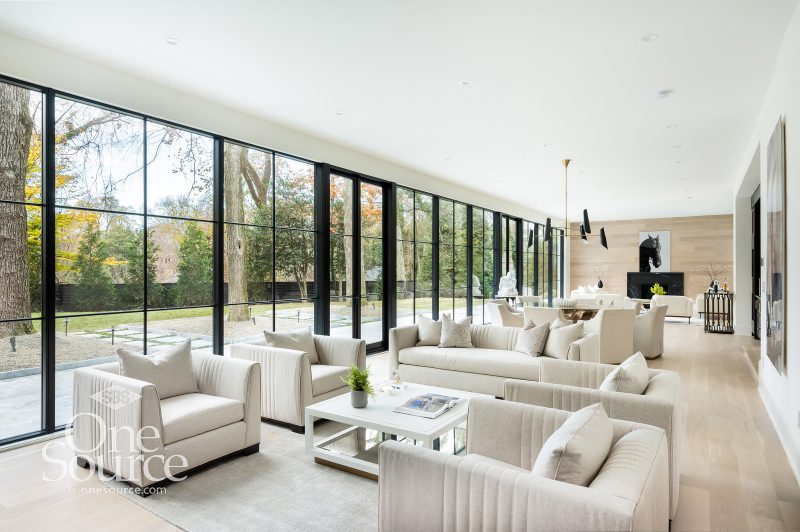
Why Can West-Facing Houses Feel Hotter?
10 September 2026
Not necessarily.
The direction a house faces is only part of the story. How hot a house feels is also influenced by window placement, building materials, ventilation, the shape of the house, and even the surrounding environment.
So if you're currently house hunting, don't immediately cross every west-facing house off your list.
It's better to first understand why that house feels hot in the first place.
Why does facing west matter?
The sun moves from east to west.
In the morning, the east side gets more sun exposure.
Meanwhile, as midday turns to afternoon, the sun moves further toward the west.
The problem is, by late afternoon the building's surfaces have already been absorbing heat from the sun for hours.
When the afternoon sun hits parts of the house with lots of windows or directly exposed walls, heat can enter the building and make the room feel warmer.
This is even more pronounced in a tropical country like Indonesia.
So really, it's not that "west is hot", but rather that afternoon sun exposure can place a fairly heavy heat load on the side of the building that's directly exposed to it.
What's more important: window placement
This is one thing people often overlook when viewing a house.
Two houses that both face west won't necessarily have the same conditions.
The first house might have a large window facing directly west.
The second house might have its main openings on a different side, while its west side is more closed off.
The results can be very different.
A large window exposed to the afternoon sun allows solar radiation to enter the room directly.
As a result, spaces like the living room, bedroom, or home office can feel hotter in the afternoon.
So when surveying a house, don't just ask:
"Which direction does this house face?"
Also ask:
"Which direction do the main windows face?"
Because the orientation of the openings can be just as important as the overall orientation of the house.
Walls also store heat
It's not just glass that needs attention.
Walls that are continuously exposed to sunlight can also absorb heat.
By late afternoon, the surface of a sun-exposed wall can become quite warm. That heat can then slowly transfer to the inside of the house.
The material, wall thickness, surface color, and the building's protective coating all affect how much of that heat makes its way into the room.
That's why two houses facing the same direction can feel very different in temperature.
A house with a design and materials that reduce heat can feel much more comfortable than another house with a similar orientation.
So don't just look at:
"The wall looks nice."
Also consider:
"How does this wall receive sunlight throughout the day?"
Ventilation actually plays a big role
Now imagine a house.
Its west side gets hit by the afternoon sun.
It has quite a lot of windows.
But the air inside the house barely moves.
Even after the sun starts to go down, heat trapped inside the room can keep the house feeling stuffy.
This is where ventilation comes in.
Good ventilation helps air exchange happen, so hot air can escape and cooler air can come in.
The position of the openings matters too.
Houses with openings that allow for cross ventilation usually have a better chance of getting natural airflow.
So when viewing a house, try opening a few windows.
Notice whether the air is actually moving or if there are simply windows on the wall.
Lots of windows doesn't necessarily mean good ventilation.
What matters is how those openings work together.
The position of the house relative to surrounding houses matters too
Imagine two houses that both face west.
The first house sits on open land without much in the way of obstruction.
The second house has trees or buildings on its west side that provide shade in the afternoon.
Both face the same direction.
But their sun exposure is different.
This is why, when surveying a house, don't just look at the building being sold.
Also look at the surrounding environment.
Are there any large trees?
Is the house in front tall enough to cast shade?
Are there other buildings that might actually reflect heat back?
Is the front yard completely open?
Small details like these can affect the day-to-day comfort of a home.
A west-facing house doesn't necessarily need to be avoided
This part is important.
If you're house hunting and come across a west-facing house, don't immediately think:
"It must be hot. Skip it."
Not necessarily.
Instead, look at the overall design.
Is there a canopy?
Do the windows have any protective elements?
Does the west side have a secondary skin or shading elements?
Are there trees that help provide shade?
Is the ventilation good?
What is the wall material like?
Is the main living space located right on the side that gets the most sun?
The more elements there are to help reduce heat exposure, the less likely it is that a west-facing orientation will become a major problem.
A canopy isn't just for looks
Have you ever seen a house with a fairly wide canopy in front of its windows?
Besides making the facade look more attractive, elements like canopies can also help shade the openings and reduce direct sun exposure.
Similar effects can be achieved with various other architectural elements, such as:
- louvers
- secondary skin
- overhangs
- curtains or blinds
- plants
- trees
- a porch or transition area
So when viewing a house, don't just judge whether the design looks good.
Also consider:
"Does this design help the house cope with the surrounding climate?"
Because a comfortable house isn't just a house that looks good in photos.
How do you check a house before buying it?
If you're surveying a house, try visiting more than once, at different times.
If possible, come in the morning and in the afternoon.
Why?
Because a house's character can feel very different at different times.
It might feel cool in the morning.
But by afternoon, certain rooms might start to feel hot.
Pay particular attention to the rooms you'll use most often.
Try to notice:
8:00 AM: how does the house's temperature feel?
12:00 PM: which parts are starting to heat up?
3:00–5:00 PM: which rooms get hit by the most sun?
Besides that, pay attention to window direction, the sun's position, ventilation, and whether there are areas that get shade.
That way, you won't be buying based purely on how the house looks the first time you visit.
So, is a west-facing house bad?
No.
A more accurate way to put it is:
a west-facing house needs to be examined more carefully in terms of afternoon sun exposure.
Direction does matter, but it's not the only factor determining comfort.
A west-facing house with the right design, good ventilation, protected openings, and a supportive environment can still be comfortable.
On the other hand, a house that doesn't face west can still feel hot if it has poor ventilation, lots of unprotected glass, or rooms that trap heat.
So don't judge a house based purely on a compass reading.
Look at how the house interacts with the sun and air throughout the day.
Before buying, check these 5 things
If you're surveying a house, take a few minutes to pay attention to:
1. Direction of the sun
Which parts of the house get morning and afternoon sun?
2. Window placement
Do large windows face directly into the afternoon sun?
3. Materials and building protection
Is there a canopy, overhang, louvers, or other shading elements?
4. Ventilation
Can air flow from one side of the house to the other?
5. Surrounding environment
Are there trees or buildings that provide shade?
These five things can give you a far more realistic picture than simply knowing:
"This house faces west."
A comfortable house isn't just about direction
When buying a house, we often focus on land size, building size, number of rooms, and price.
All of these are indeed important.
But there's something you only really notice after you've moved in:
how the house feels on a daily basis.
Is it too hot in the afternoon?
Does the air move easily?
Is the bedroom comfortable for sleeping?
Does the living room stay comfortable when the sun is blazing?
Things like these might not be printed in bold in a brochure.
But they can be exactly what determines whether you'll enjoy living there for years to come.
So if one day you come across a west-facing house, don't immediately assume it's a bad choice.
Visit it, experience it, observe it, and understand its design.
Because a good house isn't simply one that faces the "right" direction.
A good house is one that's designed and chosen with an understanding of how you'll actually live in it.
Looking for a House in Semarang?
Orientation is just one of the things to consider when choosing a property.
Location, access, environment, design, building condition, and your family's needs are just as important.
Mirailand helps you search for and compare property options in Semarang and its surrounding areas based on your budget, needs, and lifestyle.
If you're looking for a house but still unsure which area or property type suits you best, tell Mirailand about your needs.
We'll help you look at properties not just in terms of "good or not", but whether that house truly fits your life.
Mirailand — helping you find the right place to come home to.