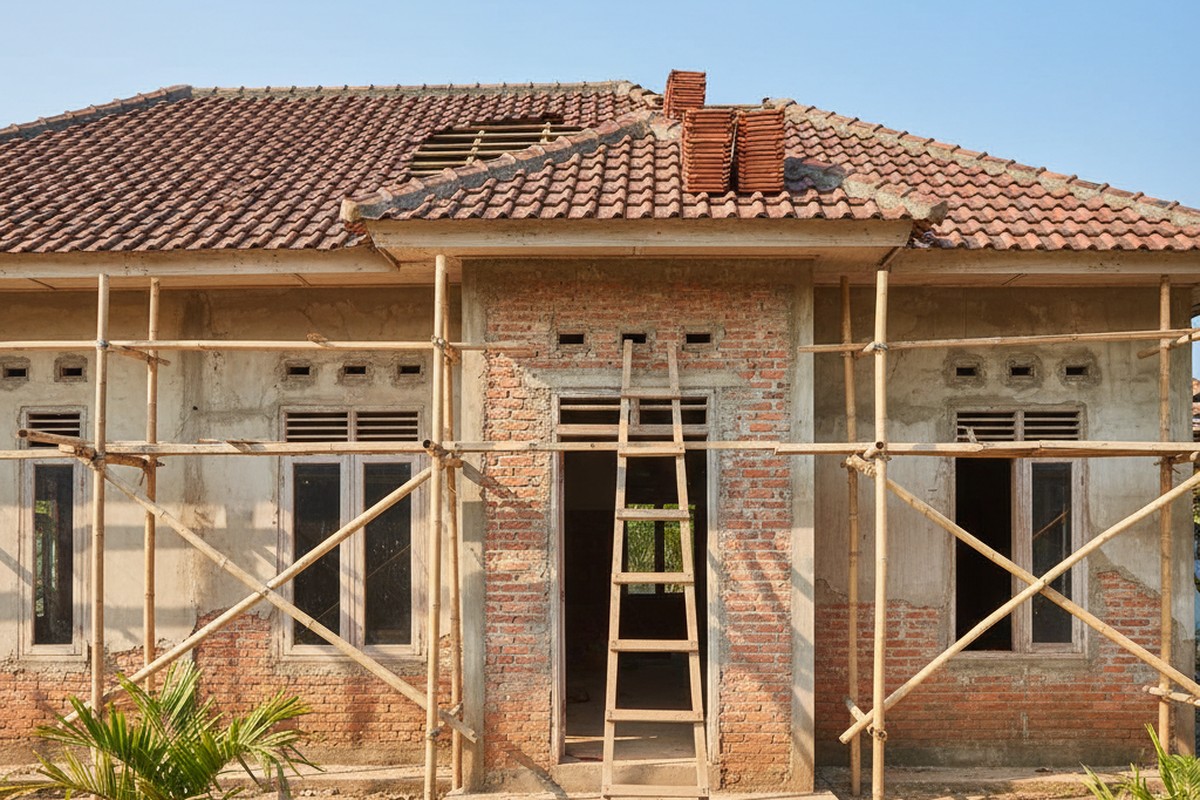
Home Renovation in the Dry Season: Why August–September Is the Right Time
12 August 2026
If you've already planned a home renovation but haven't settled on timing, the dry season in Java — which generally runs from around May to September — is the most sensible window to start. This isn't just a builder's habit; there are concrete technical reasons behind it.
Why the dry season is better for construction
Most structural work — concrete pouring, roofing installation, foundation work — is highly sensitive to moisture and rain. Concrete that's poured and then exposed to rain before it has cured sufficiently can suffer long-term structural strength issues. Roofing work repeatedly disrupted by rain increases the risk of leaks later on due to rushed or imperfect installation. The dry season gives you a more predictable working window for both types of work.
If your renovation starts now during the dry season, there's a realistic chance the main structural work will be finished before the rainy season arrives around October–November — far safer than starting major work right before the rainy season begins. The work that remains once the rain starts, such as interior finishing and painting, is much more weather-tolerant than structural work, so getting the sequence right also helps you make the most of the remaining dry season. As a rough guideline, roofing and structural work should ideally be completed before October, leaving finishing and painting work that can continue into the rainy season without major risk.
Don't overlook permit matters
Renovations that alter a building's structure — adding a floor, expanding the building, or significantly changing the façade — generally require a building permit, unlike purely cosmetic interior renovations, which typically don't need additional permits. This is a point homeowners often skip because it feels like a hassle, but a renovation carried out without a permit that should have been obtained can become an administrative problem if you ever sell the property.
If your renovation involves structural changes or expanding the building's floor area, check the permit requirements with the relevant local office before you start — not after work is already underway. We cover the basics of property legality, including IMB/PBG matters, in Mirailand's property legality guide.
Practical checklist before you start
- Get at least two to three contractor quotes before deciding — price variation for the same job can be quite significant.
- Agree on a written timeline, not just a verbal estimate — especially for work that needs to finish before the rainy season.
- Set aside contingency funds outside your renovation budget — work that opens up existing structures (such as tearing down a wall) often uncovers hidden problems that add to costs, like old electrical wiring that needs replacing.
- Photograph the pre-renovation condition, especially areas bordering neighboring properties — useful if any disputes arise over accidental damage during the work.
- Let your nearest neighbors know about your renovation plans — especially if the work involves heavy equipment or the likelihood of prolonged noise/dust disturbance; this is cheap to do and prevents unnecessary friction.
Renovation as part of long-term resale value
If one of your renovation goals is to increase future resale value, prioritize improvements that are most visible and most felt by prospective buyers in today's market — kitchens, bathrooms, and roof condition/leaks — over cosmetic renovations that only suit your personal taste. Overly personalized renovations can actually narrow your home's appeal to future buyers.
Structural improvements that aren't immediately visible — such as replacing old plumbing or reinforcing a foundation that's starting to crack — are admittedly less visually satisfying than a kitchen renovation, but they're often the deciding factor when prospective buyers do a thorough inspection before making an offer. Don't neglect what's unseen in favor of what looks appealing.
Light renovations that don't need to wait for the dry season
Not all renovations need to wait for dry weather. Purely interior work — indoor painting, flooring replacement, kitchen or bathroom renovations that don't touch the roof structure — is relatively unaffected by outdoor weather and can be done any time of year. If your plan is purely interior, there's no particular urgency to wait for August–September; the dry season's advantage applies specifically to work that directly involves a building's exterior elements (roof, exterior walls, foundation).
The dry season gives you a more reliable window for construction work — but that window is limited. If your renovation involves major structural work, the sooner you start now, the greater the chance the main work will be finished before the rainy season makes everything more complicated.