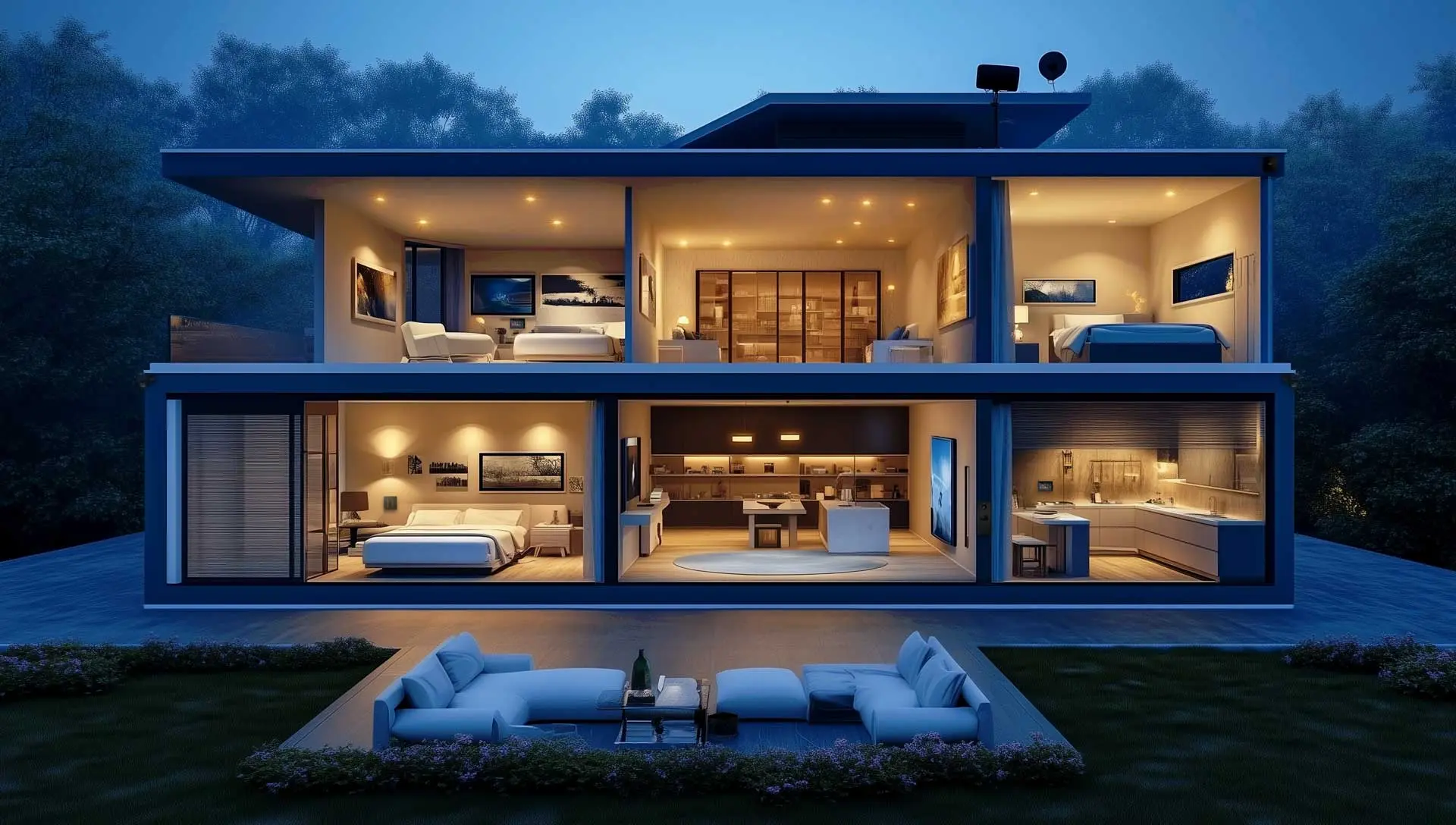
Smart Home: A Comfortable and Intelligent Housing Solution
14 March 2025
What Is a Smart Home?
A smart home is a residential concept that utilizes technology to improve comfort, security, and energy efficiency. By integrating various devices that can be controlled automatically or remotely via the internet, occupants can easily control lighting, room temperature, security systems, and even electronic appliances through a smartphone or voice assistant. As technology develops, smart homes are becoming increasingly sophisticated with the presence of artificial intelligence (AI) and the Internet of Things (IoT), which allow devices to communicate with one another and adapt to the habits of their users. Some of the main benefits of a smart home include improved energy efficiency, ease of managing the home, and more optimal security, making it a modern solution for today's lifestyle.
Main Components of a Smart Home
A smart home consists of various main components that work in an integrated manner to create a smarter and more efficient home. One key component is the automation system, such as Google Home and Amazon Alexa, which allows users to control various devices with voice commands or apps. In addition, smart security is also an important part, with technologies such as AI-based CCTV, smart locks, and smart alarms that enhance home protection. Smart lighting, such as Philips Hue and automatic light sensors, helps save energy and adjust lighting according to needs. Equally important, smart household appliances, such as smart refrigerators, automatic air conditioners, and smart TVs, provide extra comfort with features that can be controlled and programmed according to the user's habits. With the combination of these components, a smart home offers a more modern, secure, and efficient living experience.
How Does a Smart Home Work?
A smart home works by utilizing the Internet of Things (IoT), in which various devices within the home are interconnected and can be controlled automatically or remotely. These devices communicate through various protocols such as Wi-Fi, Zigbee, and Bluetooth, enabling fast and responsive data transfer. With this communication system, devices such as smart lights, security cameras, and smart household appliances can interact with one another to create a more efficient environment. In addition, smart homes are also integrated with smartphones and artificial intelligence (AI), allowing users to control and monitor their homes through apps or voice commands. With this technology, smart homes can adjust settings based on user habits, improving comfort, security, and energy efficiency.
Advantages and Challenges of Smart Home Technology
Smart home technology offers various advantages, such as energy efficiency, where smart devices can optimize electricity usage, such as lights that automatically turn off when not in use. In addition, comfort is also an added value, as occupants can control various devices with just a smartphone or voice command. Security is also improving with systems such as smart locks, AI-based CCTV, and automatic alarms that can give warnings when something suspicious occurs.
However, behind its advantages, smart homes also have several challenges. One is the fairly high cost, especially for initial installation and the purchase of smart devices. In addition, there is a risk related to data privacy, as smart home devices collect and store user data that could be vulnerable to hacking. Another challenge is dependence on the internet, as most devices require a stable connection to function properly. Even so, with technological advancements and improved cybersecurity, smart homes continue to develop into a safer and more efficient modern housing solution.
Trends and the Future of Smart Homes
Smart home trends continue to develop with increasingly sophisticated technology, especially in the use of AI and Machine Learning to create smarter automation. With artificial intelligence, smart home devices can learn user habits and automatically adjust settings, such as regulating room temperature or lighting according to the occupant's preferences. In addition, the integration of renewable energy such as solar panels and smart energy management systems is increasingly being applied to improve efficiency and reduce dependence on conventional electricity. Going forward, the development of smart home technology is predicted to increasingly focus on data security, interoperability between devices, and faster and more stable connectivity, making smart homes a more environmentally friendly, efficient, and accessible solution for more people.
Conclusion
A smart home is no longer just a concept of the future, but has become a reality that can be enjoyed today. With various benefits such as comfort, efficiency, and security, smart home technology is a solution for those who want to live more practically and in a more modern way.
For those of you who want to own a smart home with advanced technology, many housing developments now offer the smart home concept, such as BSB Citraland Smart Home, which presents a modern home solution with maximum security and comfort.