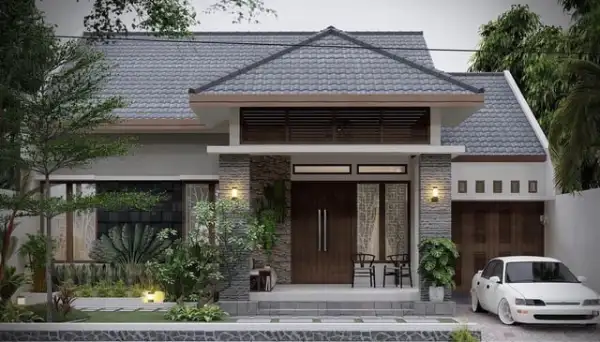
Nice House But Hard To Resell, How Can That Be?
20 September 2026
This is a situation you probably never imagined when you first bought your house.
When buying, we usually think about a house that's comfortable to live in: a nice design, plenty of bedrooms, a spacious kitchen, or an appealing backyard.
But a house is not just a place to live.
For many people, a house is also an asset that may one day need to be sold.
And this is where the problem lies:
A house that's very comfortable for you isn't necessarily easy to sell to someone else.
That doesn't mean the house is bad.
It might simply be too specific to the previous owner's needs.
So, before buying a house, it's worth asking not only:
"Do I like this house or not?"
But also:
"If I ever need to sell it someday, who would likely be interested?"
A nice house doesn't always mean a liquid house
In property, there's a difference between a nice house and a house that's easy to resell.
A nice house can mean:
- an attractive design
- quality renovations
- a luxurious interior
- premium materials
- spacious rooms
- plenty of extra features
But when it comes time to resell, prospective buyers will look at different things.
They'll likely consider:
Where is it located?
How's the access?
Is the price still reasonable?
Does the land size fit their needs?
What's the neighborhood like?
Is it easy to get financing?
So you could own a house that's physically excellent, yet its market is relatively small.
One cause: too much renovation based on personal taste
Imagine someone buys a standard house.
Then it undergoes a major renovation.
The walls are painted a very specific color.
The kitchen is custom-designed.
One room is converted into a music studio.
The garden is designed with a particular concept.
The bathroom uses premium materials.
The total renovation cost reaches hundreds of millions of rupiah.
The owner is satisfied.
But when the house is sold, prospective buyers won't necessarily value that renovation at the same amount.
Why?
Because people's tastes differ.
A prospective buyer might instead think:
"I'll need to tear this out again."
In other words, the money you spend making a house match your taste isn't necessarily fully recovered when the house is sold.
This doesn't mean renovation is unimportant.
But if there's a chance you'll sell the house in the coming years, also think about whether the renovation adds general function and appeal, or merely satisfies personal taste.
Location remains one of the biggest factors
You can replace the tiles.
You can repaint the walls.
You can renovate the kitchen.
But there's one thing you can't move:
location.
This is why location is often an important consideration when assessing a property's resale potential.
A house in an area with good access, growing facilities, and strong housing demand usually has a wider market than one that's difficult to reach.
This doesn't mean a house in a remote location is always hard to sell.
But you need to understand:
who is the target buyer?
If the house is far from centers of activity, has limited transportation access, and few nearby facilities, there may be fewer prospective buyers.
Road access can actually be decisive
There are houses that are actually nice.
The location is appealing too.
But access to the house is quite difficult.
For example, the road is too narrow for two cars to pass each other.
Or large vehicles can't get in.
Or the only access to the house is via a certain inconvenient route.
For the current owner it might not be an issue since they're already used to it.
But a new prospective buyer may see it differently.
Especially if they have a car, young children, or elderly parents living with them.
That's why, when buying a house, don't just look at the house itself.
Try stepping outside the gate.
Look at the road leading to the house.
And imagine someone who has never lived there having to pass through it every day.
A house that's too big isn't necessarily easier to sell either
There's an assumption:
"The bigger the house, the better."
Not always.
A very large house does have advantages for certain families.
But the bigger the house, the higher the price a prospective buyer usually has to pay.
And once the price enters a certain segment, the number of people who can afford it becomes more limited.
For example, you buy a house with 500 m² of land because you feel:
"Might as well go big."
A few years later you want to sell it.
The problem is, prospective buyers looking for a house at that price may be far fewer than the market for more affordable houses.
So this doesn't mean a large house is bad.
But:
the higher the price, the more specific the market you're targeting.
Don't pay too much just because of the interior
This is also worth noting when buying a second-hand house.
You walk into a house and are immediately impressed.
Nice kitchen set.
Beautiful lighting.
Floors made of premium materials.
A bathroom like a hotel's.
The furniture also looks expensive.
Then you think:
"Wow, I could just move right in."
That can indeed be an advantage.
But don't forget to separate the value of the building from the previous owner's interior taste.
An expensive interior doesn't automatically increase the house's resale value by the same amount.
Because prospective buyers may value the house mainly based on:
land + location + building + condition + access + neighborhood.
Not based on how much the previous owner spent on the sofa or kitchen set.
A purchase price that's too high can become a problem later
This is one of the most important points.
For example, you buy a house because you love it so much.
You're willing to pay more than other properties in the same area.
At the time, it might not feel like a problem.
But when you want to resell it, prospective buyers will make comparisons.
They'll think:
"With this amount of money, what kind of house could I get elsewhere?"
If your house's price is far above similar properties without a strong reason, the selling process could take much longer.
That's why, before buying, don't just find out:
"How much is this house?"
Also find out:
"How much are similar houses around here?"
The surrounding area can change, and that affects property value
A house doesn't stand alone.
Its value is also influenced by what happens around it.
A once-quiet area can develop.
New access roads can be built.
Commercial centers can emerge.
Schools or healthcare facilities can increase.
On the other hand, the surrounding conditions can also change in less favorable ways.
That's why, when buying a house for the long term, don't just look at today's conditions.
Try to see:
"Which direction is this area developing?"
You don't need to try to predict the future.
But at least understand the area's visible development and any relevant spatial planning or infrastructure plans.
A house that's easy to sell usually has a clear market
Try imagining two houses.
House A
Very unique design, very personal interior, high price, somewhat difficult access.
House B
More common design, strategic location, easy access, market-appropriate price, and move-in ready.
Which house is likely to have more prospective buyers?
It's not always necessarily House B.
But House B has an advantage because it's easier for more people to relate to.
This is often referred to as marketability.
The more types of buyers who can picture themselves living in that house, the wider its potential market.
It doesn't mean a house has to be made "ordinary"
This is also important.
Buying a house that's easy to resell doesn't mean you have to buy a boring one.
You can still choose a house that suits your taste.
You can still renovate.
You can still make the house feel personal.
What matters is the proportion.
If you plan to live in the house for decades, your comfort is certainly very important.
But if you expect to sell it within 3–5 years, considerations about market appeal become increasingly relevant.
Try using these questions before buying
Before deciding to buy a house, don't just run through a checklist like:
☑️ I like the design
☑️ The price is right
☑️ Enough bedrooms
☑️ Has a carport
☑️ Location fits
Add a few more questions:
1. Who is likely to buy this house from me in the future?
2. Is this house's price still reasonable compared to similar properties?
3. What's the access to the house like?
4. Does this area have strong housing demand?
5. Does the house size match the market in this area?
6. Will the renovations I make improve function, or just follow personal taste?
7. If I don't sell it now, will I still be comfortable owning it in the long run?
These questions help you see the house from two sides:
as a home to live in and as an asset.
Don't buy a house just because "I like it"
Of course, liking it still matters.
You'll be the one living there.
You need to feel comfortable.
But for a property purchase, an overly emotional decision can cause you to overlook more fundamental things.
A house with a dream kitchen might be very appealing.
But if the access is difficult, the price is too high compared to the market, or the location isn't in demand, you need to consider it more carefully.
The reverse is also true.
A house that looks simple might actually have the location, access, size, and price that make it more easily accepted by the market.
Beauty is subjective.
But the need for a good location, convenient access, and a reasonable price is usually far more universal.
So, how do you choose a house that's not only comfortable but also has resale potential?
Start with what you cannot change.
Location.
Then look at:
access.
the neighborhood.
size and layout.
the building's condition.
price compared to similar properties.
Only after that should you think about interior and renovation.
Because if one day you need to sell the house, the prospective buyer isn't buying your memories in that house.
They're buying the property they see in front of them.
And they'll judge it based on their own needs and ability.
A house to live in, an asset to consider
Buying a house doesn't always have to be done with the mindset:
"It's bound to be profitable later."
No one can guarantee that property prices will always rise the same way in every location.
But you can make a more sensible decision by understanding the factors that affect a property's appeal.
Because a good house isn't just one that makes you say:
"I like it."
But also one that makes you think:
"If my needs ever change, this property still has reasons for others to want it."
That's the difference between buying a house just for today and considering a house as a long-term asset.
Looking for a House in Semarang?
If you're looking for a house, don't just consider whether the property is suitable to live in.
Also consider the location, access, neighborhood, market price, building condition, and your potential future needs.
Mirailand helps you find property options in Semarang and its surrounding areas based on your budget, needs, and goals.
If you're still unsure which house is worth considering, tell Mirailand about your needs.
We'll help you look at properties not only in terms of "nice or not", but also in terms of fit, value, and long-term considerations.
Mirailand — helping you find the right place to come home to.