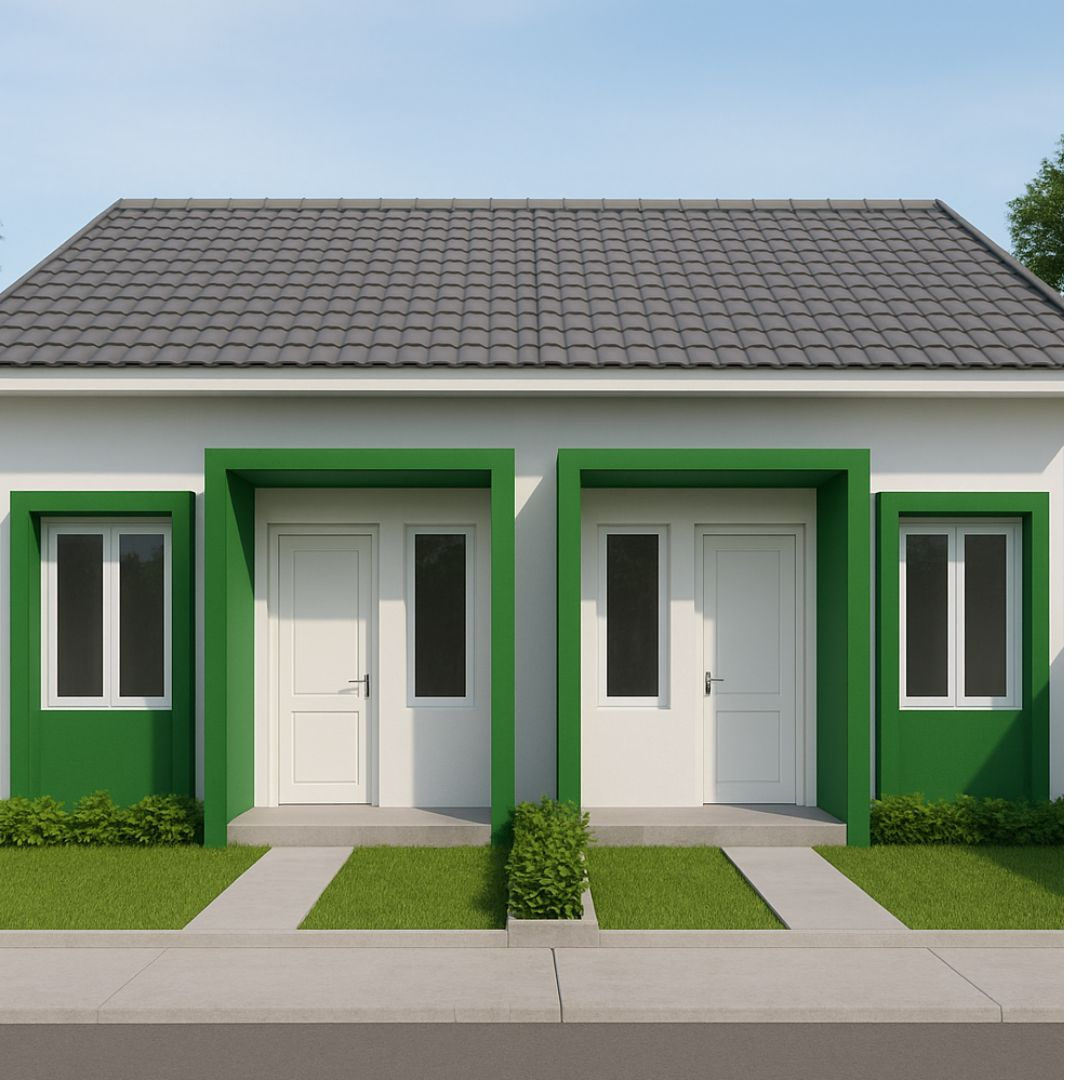
A House Vacant for 6 Months Can Change Your Investment Calculations
30 September 2026
What is a vacancy rate?
Simply put, vacancy rate is the percentage of time a property sits unoccupied or fails to generate rental income within a certain period.
For example, you have a house that should be rentable for 12 months.
But the house is vacant for 6 months.
Then the vacancy rate is:
6 ÷ 12 × 100% = 50%
This means that for half a year the property generates no rental income.
This number may seem simple.
But its impact on the investment can be quite significant.
Here's an example
Suppose you buy a house for:
Rp500 million
Then the house is rented out for:
Rp30 million per year
If the house is always occupied for 12 months, your gross income:
Rp30 million per year.
Simply put, the gross rental yield:
Rp30 million ÷ Rp500 million × 100% = 6%
Looks quite attractive.
But it turns out the house is vacant for 6 months.
This means you only receive rent for half a year.
If the rent is calculated proportionally:
Rp30 million × 6/12 = Rp15 million
Now the actual gross income is only:
Rp15 million per year.
The gross rental yield drops to:
Rp15 million ÷ Rp500 million × 100% = 3%
Just because the property was vacant for 6 months.
The figures in the brochure and the figures that actually reach your bank account can be very different.
Why can a house sit vacant?
Vacancy doesn't always mean the property is bad.
There are many reasonable explanations.
For example:
- difficulty finding a suitable tenant
- the location has low rental demand
- the rental price is too high
- the target tenant is too specific
- the house is being renovated
- the previous tenant just moved out
- the owner deliberately leaves the house empty before looking for a new tenant
- the market conditions are currently poor
The issue isn't just:
"Can the house be rented out?"
But rather:
"How long does the house usually take to find a tenant?"
Don't only calculate when the house is occupied
This is a fairly common mistake when calculating property investment.
Investors see:
House price: Rp500 million
Rent: Rp30 million/year
Then immediately calculate:
Yield = 6%
Yet this figure assumes the house is always rented out for a full year.
In reality, there may be periods of:
tenant moves out → house sits empty → repairs → looking for a new tenant → negotiation → house occupied again.
During that process:
no rental income comes in.
But ownership costs keep running.
Vacancy isn't the only cost
This is more important.
When the house is vacant, it doesn't mean all costs stop too.
You may still have to pay:
- taxes
- neighborhood dues
- security
- minimum electricity charges
- water
- maintenance
- cleaning
- repairs
- marketing costs
- property management fees
So when a house sits vacant for 6 months, the loss isn't just losing rental income.
You also still bear the property costs during that period.
This is why vacancy needs to be factored into the investment calculation from the start.
How to calculate the vacancy rate?
The simple formula:
Vacancy Rate = Length of Time Property is Vacant ÷ Total Period × 100%
For example:
A property is vacant for 3 months out of 12 months.
3 ÷ 12 × 100% = 25%
This means the vacancy rate is 25%.
If vacant for 6 months:
6 ÷ 12 × 100% = 50%
The higher the vacancy rate, the greater the potential rental income lost.
Don't just look at your own house's vacancy rate
If you're considering buying property for investment, try to find out the market conditions in the surrounding area.
For example:
How many houses are currently for rent?
On average, how long does it take for these properties to find a tenant?
What is the rental price?
Are many houses vacant?
Who is the target tenant?
Why do people choose to live in that area?
This information is far more useful than simply looking at:
"This house can be rented for Rp30 million per year."
Because a high rental figure doesn't mean much if the property struggles to find a tenant.
Rental prices that are too high can also increase vacancy
For example, the average similar house in the area rents for:
Rp25 million–Rp30 million per year.
You want to earn more, so you set:
Rp40 million per year.
In theory this is good.
Higher income.
But if that price makes prospective tenants switch to other houses, your property could sit vacant longer.
In the end:
Rent of Rp40 million × 6 months vacant
can be worse than:
Rent of Rp28 million × 12 months occupied.
So in property investment:
The highest rental price doesn't necessarily generate the best income.
What matters is the balance between price, demand, and occupancy rate.
Location greatly affects vacancy
Properties in locations with high rental demand usually have a greater chance of finding tenants.
Examples of areas close to:
- campuses
- office centers
- industrial areas
- hospitals
- business districts
- transportation
- commercial facilities
But don't stop at the statement:
"Near a campus, it's sure to rent out."
Still look at:
how many competitors there are.
Because an area with high demand may also have many property choices for tenants.
A nice house doesn't necessarily rent out quickly
This is also important.
You may have a house with:
nice interior
complete facilities
attractive design
and
complete furniture.
But if the target tenant is unclear, the house can still sit vacant.
For example, a large house with a high rental price is located in an area where most residents are students.
The facilities are indeed nice.
But the target market may be too narrow.
That's why before buying a property to rent out, think about:
"Who will live here?"
Not just:
"Is this house nice or not?"
Try using a conservative scenario
If you're calculating investment potential, don't just use the best-case scenario.
Create several simulations.
Scenario 1 — Optimistic
Vacancy rate: 5%
The property is almost always occupied.
Scenario 2 — Realistic
Vacancy rate: 10–15%
There are some vacant periods during the year.
Scenario 3 — Conservative
Vacancy rate: 25–50%
The property takes quite a long time to find a tenant.
This way you can see:
"If the house isn't always occupied, does this investment still make sense?"
If the answer is still yes, your investment has a better safety margin.
Simple calculation example
For example:
House price: Rp500 million
Annual rent: Rp30 million
Without vacancy
Income:
Rp30 million
Gross yield:
6%
10% Vacancy
Effective income of approximately:
Rp27 million
Gross yield:
5.4%
25% Vacancy
Effective income:
Rp22.5 million
Gross yield:
4.5%
50% Vacancy
Effective income:
Rp15 million
Gross yield:
3%
Not including:
taxes, maintenance, renovation, management fees, transaction costs, and other expenses.
So the actual net yield can be even lower.
So how do you reduce vacancy risk?
There's no way to guarantee a house will always be rented out.
But you can reduce the risk.
Some things to pay attention to:
1. Choose a location with clear rental demand
Find out who the prospective tenants are and why they choose that area.
2. Set rental prices based on the market
Don't set it too high just to chase yield.
3. Maintain the condition of the house
A well-maintained property is easier to market.
4. Design the house to fit the target market
A house for families certainly has different needs than a property for students or workers.
5. Pay attention to access and facilities
Ease of access to workplaces, schools, campuses, transportation, and daily needs can affect tenant interest.
6. Prepare a reserve fund
Don't use all your funds just to buy the property.
Set aside funds for periods when the house is vacant or needs repairs.
Don't forget: the vacancy rate can change
Rental market conditions aren't always the same every year.
A property that is always occupied this year won't necessarily have the same occupancy rate a few years later.
Demand can change due to:
- new area development
- changes in transportation access
- emerging competitors
- changes in rental prices
- changes in economic activity
- changes in tenant needs
Because of this, don't assume:
"It was always rented last year, so it will definitely be the same next year."
Property investment still requires periodic evaluation.
So, does a house being vacant for 6 months always mean a bad investment?
Not necessarily.
It all comes back to the purchase price, rental price, operating costs, potential property value appreciation, and your investment goals.
But if from the start you assume the house will always be occupied for 12 months, when in reality it is often vacant, your return calculation could be too optimistic.
That's why the vacancy rate should not be treated as an extra figure.
Factor it into the calculation from the very beginning.
Don't be fooled by a yield that looks high
For example, there are two houses:
House A
Price: Rp500 million
Rent: Rp30 million/year
Vacancy rate: 25%
Effective income:
Rp22.5 million/year
House B
Price: Rp550 million
Rent: Rp32 million/year
Vacancy rate: 5%
Effective income:
Rp30.4 million/year
At first glance, House A looks cheaper and has an attractive rental yield.
But once vacancy is factored in, House B actually generates higher effective rental income.
This is why investors shouldn't only look at the purchase price and rental price.
Before buying property for investment, ask this
"If this house is vacant for 3 months, will I still be okay?"
Then try again:
"What if it's vacant for 6 months?"
If the answer is:
"I can still pay the installments and other costs."
That means you've started calculating risk more realistically.
But if six months without income immediately disrupts your finances, you may need to recalculate your investment structure.
Because a good investment isn't only about how much profit can be earned.
But also:
how much risk you're able to bear.
Conclusion
A house generating Rp30 million per year does look attractive.
But if the house turns out to be vacant for 6 months, the effective income could drop to only around Rp15 million.
Not to mention maintenance costs and ownership costs that keep running.
So when calculating property investment, don't just ask:
"What's the rental price?"
Also ask:
"Realistically, how long can this property actually be rented out?"
Because in property investment:
a house that is always rented at a fair price can be more attractive than a house with a high rental price but frequent vacancies.
And one figure you shouldn't forget:
Vacancy Rate.
Looking for Investment Property in Semarang?
If you're considering property as an investment, don't just look at the purchase price and potential rental price.
Also consider:
rental demand, location, access, target tenants, maintenance costs, vacancy rate, and the property's long-term potential.
If you're looking for property in Semarang and want to compare options based on your budget and investment goals, you can discuss it with Mirailand.
Tell Mirailand about your needs and investment targets.
We'll help you consider suitable property options, so your investment decision doesn't just look attractive on paper, but is also more realistic once put into practice.
Mirailand — helping you find the right place to come home to.